Stars End S3E36

“Never Hoard Your Silver Podcast”

Sometimes we bury the lede in the title so let’s rectify that straightaway: featuring special guest Melinda Snodgrass!

We’ve never been shy about our obligatory Star Trek references. As we’ve undertaken our long, strange trip through Asimov’s Robot Novels and some related short stories, those references skewed sharply in the direction of The Measure of a Man, which is in my opinion “the moment when The Next Generation earned the right to call itself Star Trek.” It’s great TV and great SF and a monument to themes and ideas that Asimov championed throughout his career.

So for this episode, we going to treat you to an episode-long Star Trek reference as we’re joined by the author of The Measure of a Man, the aforementioned Melinda Snodgrass!

Please excuse us, we’re all a bit starstruck.

In addition to writing the quintessential Data episode for TNG, Melinda Is a ⁠lifelong Science Fiction fan⁠ who has written many novels including the Circuit series, co-created the Wild Cards series of books, and has extensive screenwriting credits including L. A. Law, Sliders, and The Outer Limits. Within the realm of Star Trek, Melinda has written Tears of the Singers, a TOS novel, and five episodes of TNG, which also include a second excellent Data-Centric episode, The Ensigns of Command.

She was the Story Editor on Next Generation while the show transformed from a program struggling to find its voice into the science fiction juggernaut we all know and love.

As Jon puts it, this episode “slaps!” You do not want to miss this one! Let’s go!

Images used under the fair use doctrine.
Happy Juneteenth 2023!

Happy Juneteenth!

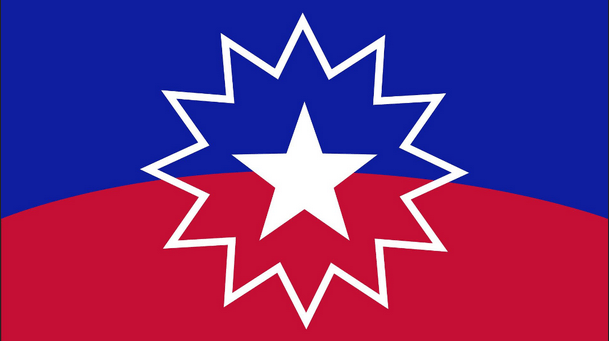
“Juneteenth,” or “America’s second independence day,” commemorates 19 June 1865, the day at the end of the Civil War when the last slaves in the United States learned that they were free in a proclamation from General Gordon Granger in Galveston, Texas.

He wrote, in part:

“The people of Texas are informed that in accordance with a Proclamation from the Executive of the United States, all slaves are free. This involves an absolute equality of rights and rights of property between former masters and slaves, and the connection heretofore existing between them becomes that between employer and hired laborer.”

This year we’ve upgraded to a version of the Juneteenth flag without the date integrated into the design, an objectively better design. You can read more about Juneteenth and its flag and see the version of the flag that includes the date in our post from last year.

State Flags: Vermont

Happy Flag Day 2023!

I thought about starting this post by pondering the efficacy of having recurring columns on a blog and, well, a job, but it seems like I began the last installment, written, in part, on Flag Day last year, with just that sort of disclaimer. I’ll try to pick up the pace.

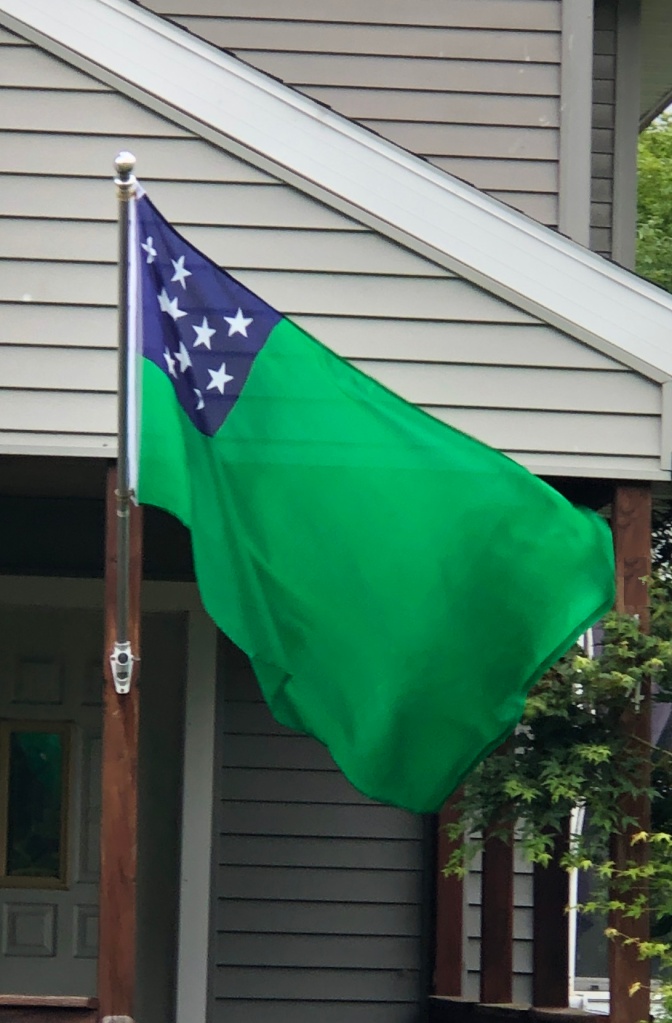
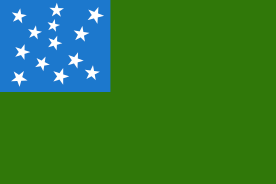
We’re flying the flag of “the Green Mountain Boys” this year which is possibly the most recognizable regimental flag of the Revolutionary War. It was likely flown at the Battle of Bennington in 1777 by John Stark.

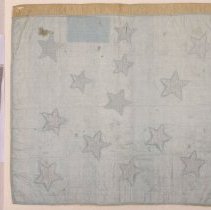
At least, there is a fragment of a flag that was flown by Stark at that battle in the Bennington Museum. It’s the canton of the flag with what appears to be remnants of green silk on three sides. But the flag as we have it today is a reconstruction; its connection to the Green Mountain Boys and its relation to Vermont are disputed.

The Fragment of Stark’s flag from the Bennington Museum

Other sources suggest that The Green Mountain Boys’ flag was the unofficial flag of the Vermont Republic and served as the unofficial state flag from Vermont’s admission to the union in 1791 to 1804.

So, how does this fit into our series on State Flags? If you recall our first installment, we’re dividing the US state flags into four categories

  1. Flags that need no changes
  2. Flags that only need very slight changes
  3. Flags that have well-established, aesthetic alternatives and
  4. Flags that require significant changes.

The Green Mountain Boys’ flag fits firmly into category three even if its early history is unclear. Multiple proposals have tried to revert the design of the state flag to the Green Mountain design, but none have been successful. That though is enough for me to consider it a “well-established” alternative.

Is it aesthetic? I think so, even if it is a bit bland. The thirteen stars in a “natural arrangement” sets it apart from other flags with stars in the canton and the green field is appropriate for the “Green Mountain State.” I won’t list them here but it easily clears the NAVA’s five principles of good flag design.

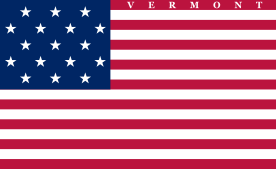
Consider the history of the Vermont flag. The Green Mountain Boys’ flag was the unofficial state flag from Vermont’s admission to the union in 1791 to 1804 when Vermont’s “second state flag” was adopted. There were 17 states at this time and the designers decided that adding stripes as well as stars was still a pretty neat idea (it wasn’t), this banner consists of 17 stars and 17 stripes. To distinguish this from a theoretical national flag, “Vermont” is written across the uppermost stripe. The third state flag, adopted in 1837, reverted to thirteen red and white stripes but had a single eight-pointed star in the canton, surrounding the pastoral scene from the center of Vermont’s coat-of-arms. On 1 June 1923, almost exactly 100 years ago, Vermont their current flag, consisting of the state coat-of-arms on a field of azure.

Among the three official state flags, two are strikingly similar to the United States flag (or perhaps Liberia’s). The third is a classic seal on a bedspread. While the Green Mountain Boys’ flag isn’t necessarily the quintessential flag for the state of Vermont, in this company it is the clear choice.

References:

Image Credits:

Stars End S3E35

“Who Really Cares What a Podcast Looks Like Or Is Built Of Or How It Was Formed”

We finally know that season 2 of Apple TV+’s Foundation will begin on 14 July. Rather than tackling another novel, we’re wrapping up season 3 of Stars End with short stories and guests.

In our next episode, we’re both pleased and proud to announce that we’ll be interviewing Melinda Snodgrass, author of the first truly great episode of Star Trek: The Next Generation, and the source of many of our Star-Trek-related digressions, “The Measure of a Man.”

But in the meantime, for this episode, we’re reading The Great and Glorious Az’s “The Bicentennial Man,” (TBM) which is based in part on a suggestion from famed science fiction editor Judy-Lynn del Rey. To quote the good doctor, “Of all the robot stories I ever wrote, ‘The Bicentennial Man’ is my favorite and, I think, the best.” In The Complete Robot, he pairs it with our last episode’s subject, “…That Thou Art Mindful of Him” (TTAMoH) in a section entitled “Two Climaxes” where he envisions the ultimate fate of the three laws and the science of robotics.

Of the two, TBM has the less auspicious genesis. You’ll recall that TTAMoH was commissioned for an anthology entitled Final Stage which charged the authors with taking their themes to their ultimate conclusion. TBM was commissioned for an anthology entitled “The Bicentennial Man” where the stories could be anything at all so long as it was suggested by the phrase, “The Bicentennial Man.” That, to a large degree, was the way things worked in the US in 1976.

But there was an earlier suggestion from del Rey about “…a robot who has to choose between buying its own liberty and improving its own body.” After reading TBM, Judy-Lynn wanted the story, and when the original anthology fell through, Judy-Lynn got the story. It appeared in a different anthology, one that she edited, Stellar Science Fiction #2 published in February 1976.

So, don’t miss our discussion of “The Bicentennial Man, ” the Good Doctor’s favorite Robot Story, and his third favorite story overall, surpassed only by “The Last Question” and “The Ugly Little Boy.”

Let’s go!

The Ally Flag

Here’s just a quick post; it’s that time of year again when I announce that I’m done with the school year and can be a real-live-boy for a couple of months. Rejoice or beware as appropriate.

We’re back to flying the Ally Flag in honor of Pride Month. Nothing particularly new about that, you can find my previous posts below for you to enjoy. The second also covers the Juneteenth Flag which we’ll be flying on the 19th. We might have an upgrade there.

In the meantime, I have something planned for Flag Day if I have time to pull it together.

My Original Ally Flag Post

This one, from 2021 also covers the Juneteenth Flag