Liar!

If you follow Stars End: A Foundation Podcast you know that we’ve discussed Asimov’s reluctance to rewrite stuff many times. Even more frequently we’ve discussed… let’s call it the Great and Glorious Az’s ability to write female characters. We’ve speculated that, after attending Boys High School in Brooklyn, Seth Low Junior College, and Columbia University, neither of which were co-educational, it’s possible that Asimov simply hadn’t spent time with many women. Aside, of course, from his mother and sister.

The Robot Chronicles

We were therefore intrigued by the following quote from “The Robot Chronicles” as published in Asimov’s Gold: the Final Science Fiction Collection. At this point in the essay, Asimov writes about his individual Robot stories and what made them significant. Here’s what he had to say about “Liar!”

In the very next issue of Astounding, that of May 1941, my third robot story, “Liar!” appeared. The importance of this story was that it introduced Susan Calvin, who became the central character in my early robot stories. This story was originally rather clumsily done, largely because it dealt with the relationship between the sexes at a time when I had not yet had my first date with a young lady. Fortunately, I’m a quick learner, and it is one story in which I made significant changes before allowing it to appear in I, Robot.

You can find the story in any edition of I, Robot or The Complete Robot and you can see the original version in the May 1941 edition of Astounding here.

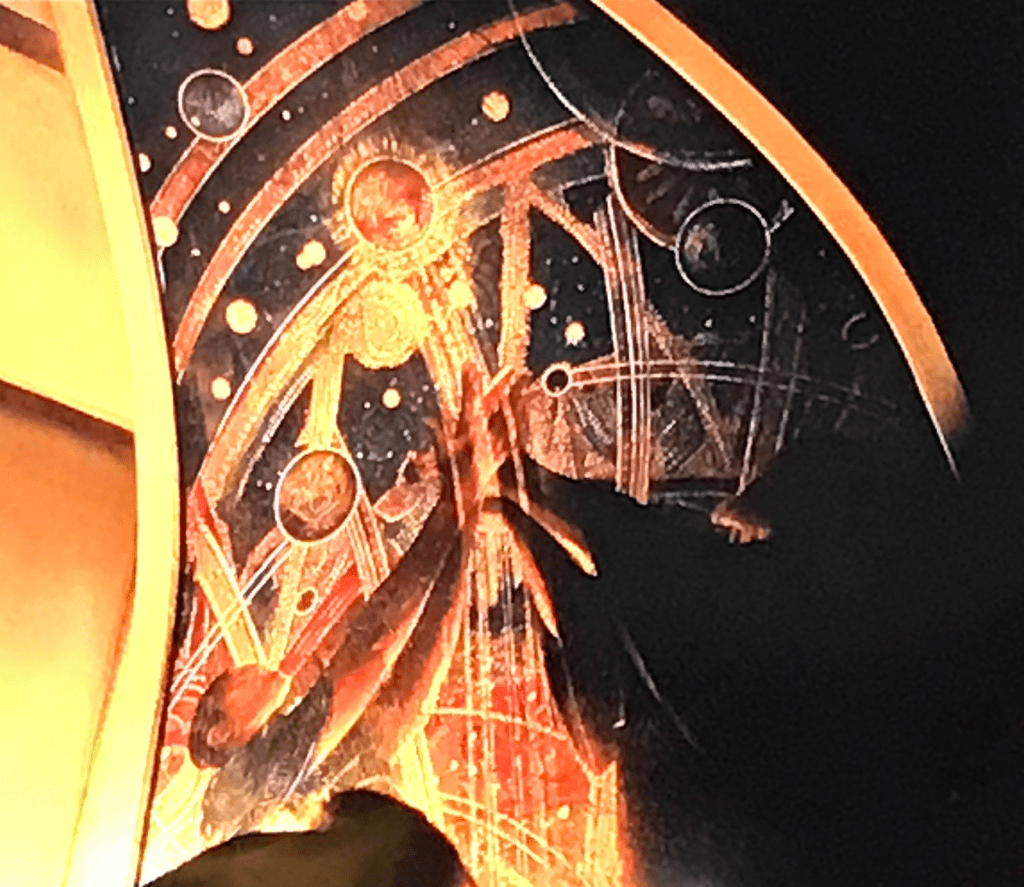
The original artwork for “Liar!” by Charles Schneeman

If you haven’t read it, “Liar!” tells the story of Herbie, a robot accidentally created with the ability to read minds. As the roboticists at U. S. Robots and Mechanical Men work to find out what caused this ability we get a first-hand look at how Herbie’s ability to read minds interacts with the three laws. We also get to see how Herbie’s subsequent behaviors affect the humans around him.

For those of us on the podcast, it was nice to get some confirmation for the theory we’d proposed on the show. For anyone who considers themself an Asimovologist, the changes to “Liar!” are intriguing for two reasons. The first is to see how Asimov’s treatment of women progressed to address the clumsiness that he perceived. The second asks how much of a rewrite he considers “significant.”

The Individual Edits

So let’s take a look at the changes. The first occurs in the fifteenth paragraph. Here’s the text from Astounding.

“Bogert is right,” said Dr. Calvin. “Ever since the Interplanetary Code was modified to allow robot models to be tested in the plants before being shipped out to space, antirobot propaganda has increased. If any word leaks out about a robot being able to read minds before we can announce complete control of the phenomenon, Tyrone and his demagogs (sic) could make pretty effective capital out of it.”

In the I, Robot version, the underlined part has been changed to, “pretty effective capital could be made out of it.” This change does not seem substantive. The mention of Tyrone was likely Asimov teasing a story that was ultimately never written. We would need evidence before we could say that for sure.

The next change occurs shortly after the first section break. Again and going forward, we start with the Astounding version.

“She paused to readjust the huge ‘No Entrance’ sign upon the door and then approached the robot with a friendly smile.”

Here, Susan Calvin is entering a room to bring books to Herbie. In the revised version the underlined text is omitted, which makes sense. Between this version and the publication of I, Robot, the character of Susan Calvin evolved into a no-nonsense professional thus the friendly smile seems to be a bit out of character. In a larger sense though, a disarming smile might ease interaction with another human but there is no reason to try that with a robot, much less a mind-reading one. The brilliant robopsychologist would have known this so the original neither fits the character nor the story.

Dr. Calvin and Herbie have a conversation about Milton Ashe. Eventually, we get this.

“The psychologist paused in thought and then looked up suddenly. ‘A girl visited him here at the plant half a year ago. She was pretty, I suppose—blond and slinky. And, of course, could scarcely add two and two.’”

In the book, “slinky” becomes “slim,” a more conservative and genteel description that seems more in keeping with Calvin’s personality. “Slinky” implies things about the way the woman holds herself and how she dresses. The combination of “slinky” with the remark about the young lady’s intelligence creates a different and less complimentary image of the character.

A bit later, we see this bit of conversation about Susan Calvin.

“He opened his eyes wide and frowned, “Say, Bogie, have you been noticing anything queer about the dame lately?”

The revised version replaces “dame” with “lady.” Another move toward more respectful language.

Next, we encounter one of the less substantive changes.

“Are you crazy? If you’ll reread Mitchell’s original paper in the Mathematical Journal—

“Mathematical Journal—” becomes “Transactions of the Far—.” The latter sounds more like an actual journal, but it loses the emphasis that the paper appeared in a mathematics publication. That should have been clear from the context, however.

The most substantive change comes when Milton Ashe shows Calvin a sketch of a house he’s planning to buy. All of the underlined text is removed from the later version.

“Susan Calvin gazed across at him with melting eyes. There had been a preliminary self-consciousness when she had first forced her hair into curls and lacquered her fingernails a bright red — a silly everyone-is-snickering-at-me feeling — but it always vanished when she was with him. There was nothing then but the hard metallic voice of Herbie whispering in her ear —. ‘It’s really beautiful,’ she sighed…”

It’s an edit that improves the story. This sentence seems more suited to a cheesy romance comic or a movie like Beach Blanket Bingo than it does to an Asimovian robot story. This sentence seems especially out of character for Susan Calvin as the character had developed over many stories and many years.

Most of the remaining edits were made because the “Three Laws of Robotics” weren’t carefully codified until published in “Runaround,” which appeared ten months after “Liar!” It makes sense for the collection to use the language to which the readers had become accustomed. Thus, instead of this,

She faced them and spoke wearily. “You know the fundamental law impressed upon the positronic brain of all robots, of course.”

we get this.

“She faced them and spoke sarcastically, “Surely you know the fundamental First Law of Robotics.”

There’s the additional change from “wearily” to “sarcastically.” That’s more in keeping with Calvin’s character and because the two men she was talking to would unquestionably know the three laws; this isn’t a case of having to remind someone of the three laws; Calvin is making a rhetorical point.

But it’s also an opportunity to remind the reader of what the first law says, so while we initially got this,

“Certainly,” said Bogert. “On no conditions is a human being to be injured in any way, even when such injury is directly ordered by another human.”

After “Runaround,” we get the now-familiar wording.

“The other two nodded together. “Certainly,” said Bogert, irritably, “a robot may not injure a human being or, through inaction, allow him to come to harm.”

The insertion of “irritably” follows nicely from the inclusion of “sarcastically.” We get one more edit concerning the three laws. In Astounding, the exchange above is followed by this.

“How nicely put,” sneered Calvin. “But what kind of injury?”

And in I, Robot, “injury” becomes “harm,” which seems to fit better with the revised version of the First Law.

The first use of “robotics” in “Liar!”

An interesting aside: In “The Robot Chronicles” Asimov claims that the term “robotics” first appeared in print in the initial printing of “Runaround.” The Oxford English Dictionary, notes this and gives Asimov credit for inventing the word. The use of “robotics” predates that, however, as it’s used twice in “Liar!” in addition to the time noted above, which exists only in the revised version.

The final edit in “Liar!” aside from one that appears to fix a typo, comes in the following passage at the very end of the story.

“It was minutes after the two scientists left that Dr. Susan Calvin regained part of her mental equilibrium. Slowly, her eyes turned to the living-dead Herbie and the tight smile returned to her face.”

“Tight smile” is aptly changed to “tightness,” as the operant emotion at this point is anger. This again seems to fit Susan Calvin’s character better than the original.

A Holistic Look

It’s more apparent in retrospect than it would have been in 1950 when I, Robot was compiled but “Liar!” is an important story in the Asimov canon. It’s the first time the idea of a robot with mental powers is discussed, an idea that becomes a pillar of Asimov’s later work, and the Oxford English Dictionary recognizes it as the earliest known use of the word “robotics.” more importantly though, “Liar!” is the first appearance of Susan Calvin, one of Asimov’s most consequential and well-known characters. She’s so central to the early robot stories that the framing sequence of I, Robot is written as a conversation between Calvin and a biographer. Through this conversation, she introduces each chapter. I, Robot is Susan Calvin’s story and the introduction tells us that “In 2008, she obtained her Ph.D. and joined United States Robots as a ‘robopsychologist’ becoming the first great practitioner of a new science.”

So, let’s look at the changes holistically. There appear to be three categories.

There seems to be one change to smooth out the prose, where “Mathematical Journal—” becomes “Transactions of the Far—.” This reads better because the partial title seems more believable for an academic journal.

There are several bookkeeping changes, namely the one removing “Tyrone and his demagogues” and all those updating the Three Laws of Robotics. These are exactly the kinds of edits one should expect in a fix-up like I, Robot. In any series of stories, details will never be completely determined initially. The book will feel more cohesive if small changes are made for the sake of consistency.

The changes that remain must be what Asimov was referring to when he wrote, “This story was originally rather clumsily done, largely because it dealt with the relationship between the sexes at a time when I had not yet had my first date with a young lady.

I’m not sure that these edits hit that mark and I’m certain that they fall short of being significant.

Let’s recap these changes. We have:

  • Calvin doesn’t approach Herbie “with a friendly smile.”
  • Calvin describes Ashe’s girlfriend as “slim” rather than “slinky.”
  • Ashe refers to Calvin as a “lady” rather than a “dame.”
  • The removal of the sentence where Calvin feels self-conscious about changing her hair and wearing make-up, but that feeling disappears when she’s with him.

So, are women written better as a result of these edits? When Asimov wrote about “significant” changes, it is reasonable to expect something like a fundamentally different subplot for Susan Calvin. Her subplot still resolves around a cringeworthy mistaken impression. It depends on some unfortunate tropes, like Calvin changing her hair and makeup to attract Ashe and destroying Herbie in a fit of pique. That subplot remains “clumsy,” and Asimov’s treatment of female characters isn’t significantly better. For example, although Ashe’s unnamed girlfriend is no longer “slinky,” she remains unable to add two to two.

But the changes are likely more about Susan Calvin than writing women in general or making the story less clumsy. It’s disappointing to ponder “Liar!” as Calvin’s initial appearance because it means that Asimov had the silly unrequited love subplot in mind and Calvin was created because the subplot required a female character. But over the following nine years Calvin and the characters surrounding her became the centerpiece of Asimov’s robot stories; they turned into the brilliant, serious professionals who drove the plots and resolved the problems. These edits are just enough to make this story fit with the rest of the book but is it a consistent portrayal? Let’s look at the framing sequence. In the run-up to “Liar!” Calvin tells the biographer “I was foolish once, young man. Would you believe that?” “No,” he replied.

Resources

  • Asimov, Isaac. “Liar!” Astounding Science Fiction, May 1941, pp. 43-55.
  • Asimov, Isaac. “Liar!” I, Robot, ©1950, 1977, Bantum Spectra
  • Asimov, Isaac. “The Robot Chronicles,” Gold: The Final Science Fiction Collection, ©1995, Harper Collins e-books
  • Liar! (short story), Wikipedia, accessed 30 June 2022

Simultaneously Published at:
My Voyager Rewatch: S4E19

My #StarTrekVoyager rewatch S4E19 The Killing Game Part 2

Last time: the Hirogen had taken over the ship and were forcing the crew to act out scenarios from Earth’s history. A WWII fantasy is escaping the holodeck into the rest of the ship. I wasn’t impressed with part 1. Hopefully, this one is better.

In a metaphor for the show’s new status quo, Janeway & Seven know what’s going on. Everybody else is little better than a side character. The head Hirogen, who thinks holodeck tech is the key to saving his race from extinction is tying everyone else’s hands.

Along the way, there’s a nice character moment with Janeway and Chakotay but only sort of because Chakotay doesn’t know who he is. According to Paris, Nazis are “totalitarian fanatics bent on world conquest — the Borg of their day.” Ugh.

Janeway’s alone with the lead Hirogen. If this is true Trek, she’ll offer to help his plan to stop extinction. She strikes the deal. ✔

Too much time left for that to be the end. The other Hirogen must rebel. They do. ✔

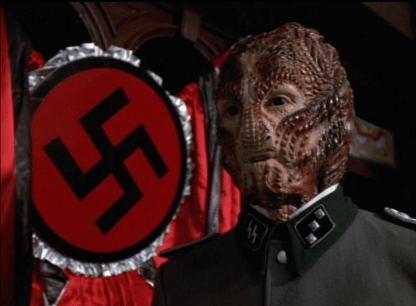
But not without a pep talk first from a holographic Nazi.

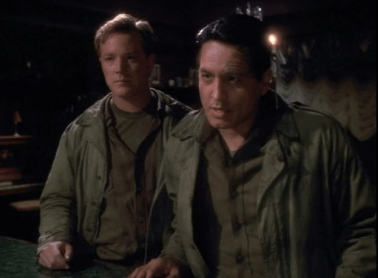
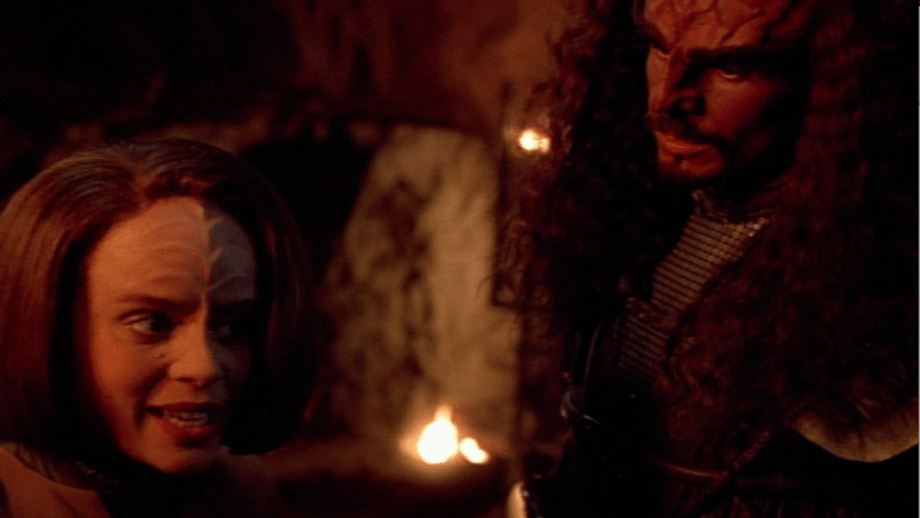
Soon the one Hirogen who’s not a complete idiot is dead. The species is doomed, but not before a lot of tedious conflict. The pacing is terrible. There’s a subplot in Holodeck One with some Klingons but it doesn’t advance the story. It’s filler that provides screen time for the Doctor & Neelix.

Neelix is a ridiculously bad Klingon. Eventually, the Klingons kill some of the Nazis. That’s not too bad. Finally, there’s a truce. Janeway gives the Hirogen holodeck tech which is probably useless without the smart one.

The Hirogen, like the Nazis, are headed for the dustbin of history. There’s more action in Part 2 but it’s not interesting. What might have been one halfway decent episode is ruined by filler as it’s stretched to two. Must have been fun to write though. I hope the writers had more fun than I did.

Rating: 1 out of 5.

#StarTrek #StarTrekVoyager

Images used under the fair use doctrine.

My Voyager Rewatch: S4E18

My #StarTrekVoyager rewatch S4E18 The Killing Game Part 1

In the teaser, Janeway is cosplaying a Klingon. That’s just odd. We quickly learn that the Hirogen have taken control of the ship and are programming the crew to act in holodeck simulations. I hope these Hirogen aren’t idiots.

I hate holodeck episodes. Usually, they’re an excuse for weak writing. Now it’s a WWII restaurant fantasy in occupied France. Yawn. The setup is taking too long. We see Janeway deciphering a message. “That might be fun to look at assuming it’s a real message, ” I thought. No luck.

And there’s some Hirogen philosophizing. Most of them are idiots but one of them at least is smart enough to realize that they’re all a bunch of idiots racing toward extinction. His plan to stave off extinction is too simplistic though.

The cliffhanger is marginally interesting; the crew, believing themselves to be WW2 combatants are about to encounter the rest of the ship. It’s not awful, but the whole episode reminds me of an old double album with way too much filler. There just isn’t enough here.

Rating: 1.5 out of 5.

#StarTrek #StarTrekVoyager

Images used under the fair use doctrine.

My Voyager Rewatch: S4E04

My #StarTrekVoyager rewatch S4E04 Nemesis

Unlike E03 I remember this one from last year. The description kind of gives away the fact that there’s a twist. That’s annoying. The teaser is startlingly short. I’ll be vague but spoilers are unavoidable.

Chakotay’s shuttle is shot down and he finds himself in a war zone amongst some of the combatants. They seem decent and welcoming. A lot of effort was put into their speech patterns. Interesting & charming but somewhat stilted they give the impression of alienness.

The enemy soldiers look like Naussicans to me. When we see them they’re brutal. Too much of the episode is about Chakotay being drawn into the conflict and he’s an enthusiastic participant by the time he’s rescued. No mention of the prime directive.

In retrospect, the twist is fairly obvious in an episode about propaganda and the fog of war. Outside the propaganda, the episode gets points for neither sanctifying nor demonizing the two sides. Still, it pales in comparison to “Chain of Command” which explores similar themes.

It’s an engaging episode, but unbalanced. We see Chakotay’s descent, but not his redemption. We needed to explore the aftermath, but it’s dismissed with a banal one-liner. Entertaining in the moment, but unsatisfying unless you’re content with a punch-line.

Rating: 2 out of 5.

#StarTrek #StarTrekVoyager

Images used under the fair use doctrine

Adventures in Podcasting

It’s been a while since I’ve posted anything about the Stars End Podcast here. There is a couple of reasons for that. The first is that it’s a bit of a pain in the neck to copy a post from one WordPress site to another; that’s one of the few things I really don’t like about WordPress. The second is that, as the academic year progressed, I became worried about this site turning into “All Asimov all the time.” That’s better than what did happen though which was months with very little content here. If 2022-2023 turns out anything like 2021-2022 that could happen again. Long story short, I’m reversing that policy. If you want to follow the Stars End Podcast you’ll be able to do that here apart from some occasional exclusives.

So, let’s get caught up.

Last December as we were wrapping up our discussions of the Apple TV+ series we made our first collective guest appearance on another podcast, The Starbase 66 podcast from the Infinite Potato Alliance.

This was especially nice for me as the host, Rick is one of my oldest friends. He also guested on Stars End last month.

Also, you might notice that we have a spiffy new logo. The spirals were created using four logistic functions plotted on the polar coordinate system using Maple, a professional-grade mathematics program. That gives us a stylized representation of the Milky Way Galaxy. The starburst was taken from one of the early images published from the James Webb Space Telescope. It represents the location of Trantor, the capital of Asimov’s Galactic Empire. It’s as close to the black hole at the center of the galaxy as a star can be which is why Trantor is known as “where the stars end.” The background, fleshing out our stylized galaxy is a public domain image of the Horsehead Nebula.

How about all of our episodes? We’ll jump back to the beginning of the podcast in case there are some new listeners here. If you want to get caught up or get started, you can use these links.

  • In season one, Dan <@MrEarlG> and Jon <@jblumenfeld100> and I read through and discussed Asimov’s original Foundation Trilogy in anticipation of Apple TV+’s Foundation series. We also tracked show news when we could find it and had a fun segment called Asimov Trivia.
  • Our season two coincided with season one of Foundation. There’s a prelude, a discussion on each episode, a season overview, and our first-ever Hari Awards!
  • We’re in the middle of season three right now and it will continue until Apple TV+ decides to grace us with more new episodes. We’ve gone back to reading Asimov’s work; so far this season we’ve worked our way through the prequels, Prelude to Foundation and Forward the Foundation. We’ve just started reading and discussing the robot novels beginning with The Caves of Steel.

Finally, here are our latest two posts on StarsEndPodcast.WordPress.com, the start of our Caves of Steel stuff.

You can look for these here going forward.

Image Credits:

The featured image and the Stars End logo © The Stars End Podcast, 2021

My Voyager Rewatch: S4E03

My #StarTrekVoyager rewatch S4E03 “Day of Honor”

The title and description tell me this is a Klingon episode. Not wild about that; IMO the Klingons become less interesting the more we learn about them. I watched this not too long ago and remember nothing, also a bad sign.

But there’s Vorek; I do like Vulcans. Torres was going to undergo a Klingon ritual for sentimental reasons which is a nice piece of irony. Meanwhile, Seven requests a duty assignment & wants to work in engineering. That’s the set-up. The Caatati are the first thing to seem familiar.

Blood pie is orange hummus. The Day of Honor ceremony starts with communion. Star Trek engineers are essentially warriors but Torres has no good answer to how she’s distinguished herself. When she leaves the holodeck, a character tries to force her to stay; this show has consent issues.

It’s all peculiar but then we get to leave all the Klingon nonsense behind. I have a mixed impression of the Caatani. Mostly they’re too simplistic, but they spur Seven to become more human and their forgiveness foreshadows the crew’s eventual acceptance of her.

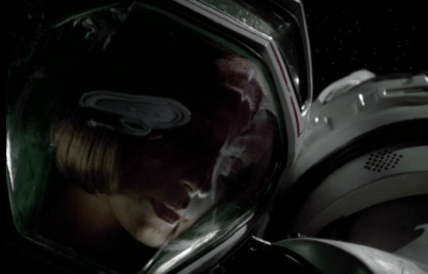
There’s some dumb stuff as well, like using “ion turbulence” to explain an air leak when there was an EXPLODING SHUTTLECRAFT nearby. The “Torres and Paris float in space” story syncs poorly with the Caatani story. My favorite part of the episode is the final visual, where Voyager arrives to save Tom and B’Elanna but is only seen as a reflection in B’Elanna’s helmet.

Mostly forgettable, but it works somewhat as a vehicle to drive development for Seven and to jumpstart the relationship between Belanna and Tom. Overall, not great, not terrible. Mediocre.

Rating: 2.5 out of 5.

#StarTrek #StarTrekVoyager

Images used under the fair use doctrine

My Voyager Rewatch: S4E02

My #StarTrekVoyager rewatch S4E2 The Gift.

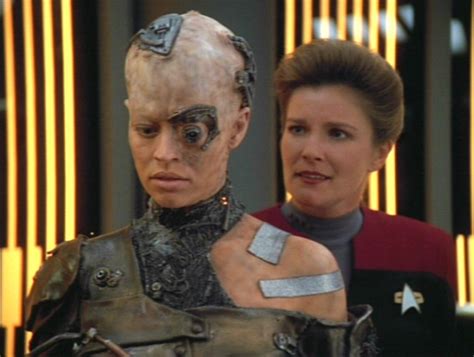
It’s interesting to see Seven adamantly determined to return to the Collective. This might have built some suspense, but everyone knew Jeri Ryan was joining the cast and Jennifer Lien was leaving. If not, the credits give it away.

(Directed by Anson Williams?! Potsie Webber? IMDB says yes.)

This episode has two parallel threads. Kes’ waxing mental powers, and Seven’s waning Borgness. In particular, Kes’ arc couldn’t be explored until she was leaving the show. Too powerful, she’d obviate the rest of the crew. She’d either solve everything or they’d need some contrivance as to why she couldn’t. Instead, we get a contrivance that gets Kes off the ship, thick with mysticism & technobabble, but still somewhat entertaining.

Meanwhile, Seven is made more human against her will and the show explores the grey area between consent and competence. It walks that line fairly well. It’s a powerful scene when Seven starts to process her individuality and starts using singular pronouns.

The visuals are a nice touch as well. We can see Seven becoming more human, not just with the removal of the Borg tech but through subtler things like changes in skin tone. The two threads weave together. As one character becomes more a part of the crew, the other less. As one comes into herself the other loses her identity. One has choices the other has none.

It’s a bookkeeping episode that does what it needs to do, namely manage the cast changes, but it’s better than that. This is a well-thought-out episode that is ultimately pretty satisfying. I’m glad Kes didn’t just disappear to Mandyville.

Rating: 3.5 out of 5.

#StarTrek #StarTrekVoyager

My Voyager Rewatch: S4E17

A quick note: I lost track of this project after a quick 12-hour sentence in Twitter jail when my pending tweets about an episode got erased. It was a terrible episode (worse than this one) and I didn’t have the heart to watch it again. But I think I can face that now. So let’s get back to it.

My #StarTrekVoyager rewatch S4E17 “Retrospect”

Seven punches an arms dealer because he deserved it.

Janeway disciplines her without hearing both sides. “You have to learn the difference between having an impulse and acting on it” is particularly troubling a quarter of a century later.

We take a sharp turn into memory suppression, and Seven has an anxiety attack. The Doctor is insufferably smug; he created and implemented a new, untested psychiatric subroutine. Memories are recovered of Arms-Dealer-Guy stunning Seven and removing Borg tech from her implants.

We never really know what happens, but the crew decides that the repressed memories were false on some thin circumstantial evidence. They claim that they were supportive of Seven but weren’t really. They claim to have been impartial in their investigation but weren’t that either.

There’s too much to unpack here. Lots of dubious choices and bad logic. Janeway makes a series of bad decisions and the resolution seems at odds with the tone of the episode and the actions of the characters.

We circle back and blame the Doctor’s subroutine which never should have been used without testing. It bugs me that Seven is remorseful even though it’s not clear she was wrong. What the point here is unless it is to showcase how awful these situations can be in real life? Bleh.

There’s a good Asimov story lurking underneath here as the Doctor causes a lot of harm by being impetuous. It would be interesting to see what would have played out differently had he been governed by the Three Laws of Robotics.

Rating: 1.5 out of 5.

#StarTrek #StarTrekVoyager

Watching Foundation: “Barbarians at the Gate”

Watching Foundation – S1E04

Getting caught up on these, still: Spoiler Alert! You know what to do!

That’s a crazy opening! C14 tries to commit suicide. I guess it didn’t take long for the mental health of the Cleon’s to become an issue. Maybe they should have let C11 live a bit longer and tried again.

Personal Shields Can Come in Handy.

He doesn’t die, but the young lady gardening runs away from him.

Funeral. For whom? “Faith is a sword forged in the fires of the infinite.” These ladies remind me of the Sisterhood of Karn from Doctor Who.

This is an odd sequence. It looks like some things are launched from the funeral which impact on a gas giant, making it all wibbley wobbly. The funeral must be taking place on one of the moons. Shift to Demerzel watching remotely.

Sexy time for C13. The Cs have a Kinetic field. Maybe Junior didn’t try to commit suicide after all. But he sure scared the crap out of that girl.

Demerzel interrupts sexy time. Brother Day is needed.

“Proxima Opal has passed.” That must be who the funeral was for. There is debate about her successor in the Conclave. It’s basically the political version of technobabble but the Cs aren’t happy about a possible candidate. Something about “Primary Octavo.” Unsurprisingly there’s a religious dimension to the Cs claim to rule.

“Luminism” must be a religion. Primary Octavo states that only individual beings have souls, excluding the Cs. No souls for you! Why not counter with the Cleons having a single soul? That makes the dynastic succession that much stronger. None the less it threatens their rule.

Back to Salvor and the Anacreonians.

The Anacreonians claim they want a navigation module. Salvor finally shows some indication of being smart. But “If you were going to kill me, you’d have done it already” reminds me of a bunch of things, not the least of which is Clara in “Deep Breath” (Doctor Who), which was a lot better.

Salvor and Phara go through the gate. “If she isn’t back within a watch, we’ll raze your city to the ground,” which wouldn’t take that much.

The Anacreonians are acting like terrorists.

Salvor sees the boy, but Phara does not.

Using the Vault to incapacitate Phara was smart.

“The stories about Salvor Hardin? They usually begin here. The warden and the ghost.”

We get a Direct refutation of old Hardin. Abbas says “Violence is the last refuge of the incompetent.” Salvor calls it “an old man’s doctrine.”

Questions about the plan.

Abbas: “If you were better at math, you’d know that repeated luck was more than just luck, Salvor.” Maybe. Except that random events can cluster in a way that seems non-random to our brains.

Back to Trantor. We meet Shadowmaster Olbrecht. C14 wants the name of the girl in the garden. Was he trying to manufacture a meet-cute with a faux suicide attempt?

Salvor is channeling Rosencrantz and Guildenstern are dead with the coins. Does she have some kind of mental powers?

Neutron bombs. 50% of the population on Anacreon died off within a week, 20-30% in the remaining year. But the use of neutron bombs changes a lot of assumptions; most of the infrastructure should be intact.

Salvor seems to intuit things about Phara. She wants to die. She wants everyone to die. Larken Keaen was the greatest hunter of Anacreon, so Phara must be the Grand Huntress of Anacreon.

Hologram Hari? Finally! But no, not that one.

The Outer Kingdoms are starting to fray away from the Empire. “Seldon all but gave you a to-do list and you ignored him!”

It’s even clearer that the “middle throne” is the actual emperor. I can’t believe these guys are a Kiwanis Club. President-Elect, President, and Immediate Past President.

Arguments about the plan. “I may be an outlier, Lewis, but I’m not the one screwing up the plan!” Lol, even though I’m feeling a bit sorry for Lewis.

Kubbra Sait is excellent. Real gravitas. “A weapon is only as good as the man who’s wielding it.” The music is briefly reminiscent of a motif in Doctor Who.

Trantor again. Gardener girl is Akuta Something? C14 is being a dick to her even as she’s being kind.

“If you’re not dead within the hour, have a kilogram of these sent to my quarters.”

Salvor has a vision of Seldon’s library. There’s THAT kid with THE knife. We’ve been seeing images of Raych.

Then they tell us what they’ve already shown in case we didn’t understand it.

Churchill from Doctor Who is a statistician. Thousands working. No results after 30 years? Claims the predictive models of Seldon are “counter factual.” Brother Day is having none of it. Lee Pace is fantastic here as he yells a statistician to death. Probably.

The philosophical divide seems to be couched as “Free will” vs. “predestination” rather than “Great Man” vs. “Bottom Up.” Although maybe that’s the same thing.

C13 gives 12 a rash of crap for his actions in episode 1. An almost complete repudiation. The discomfort Brother Dawn felt with the executions comes home to roost. “I will save our legacy.” Demerzel reinforces C13. “Certainly now the empire will no longer be rent by impulsive action.” He probably doesn’t get the sarcasm.

We see Dorwin. He’s sent to investigate the communications buoy and told to pay a visit to the Foundation. “The Empire will not be kept in the Dark.” Wowd Dowwin doesn’t sownd wight thow.

Meanwhile C14 is spying on Akuta using a drone that looks like a dragonfly. Creepy, but she doesn’t seem to mind.

Phara makes an argument that they really want the navigation module. To relocate from Anacreon. “You can’t negotiate with someone who’s willing to set the board on fire.”

Salvor thinks there’s a bigger picture that she’s missing. Reassessing is a sign of smart. She puts it together that the Vault is connected to Hari.

The Anacreonians are preparing to raze the city such as it is. Like a strong wind couldn’t do that.

“And the beginning of the end, as befitting its name, took place on Terminus.”

And in a Marvelesque precredits scene, a ship approaches Gaal Dornik’s escape pod.

Rating: 4 out of 5.

All Images from Foundation on Apple TV+

You can find our podcast here:

Watching Foundation: “The Mathematician’s Ghost”

Watching Foundation – S1E03

Spoiler Alert! There may be plot complications!

You know how this works. Random thoughts about Episode 3, no post podcast revelations this time.

Cleon 1 with Demerzel 400 years previous. He’s dying and wistful, annoyed that although they’ve started the clone dynasty his ego will not persist. Your continuity is assured Dermerzel tells him. It looks like she gets to hold things together while Cleon 2 grows up.

19 years after the StarBridge bombing. The timing is interesting given that we’re just off the 20th anniversary of 9/11. Are we now looking at an analog of contemporary politics?

Sounds like it is Dusk’s final Day, foreshadowed by Cleon I’s flashback.

“The world is starting to see me at a distance” is a nice turn of phrase.

What is “ascension” exactly?

We parallel the passing of the torch metaphor with the tailor somewhat obviously.

Dusk is still questioning what happened with Anacreon and Thespis and pondering if he has anything left to say. “About anything. About whether any of this is truly within our power to control” juxtaposed against an image of Dusk casually swiping through holograms of planets.

They’re still thinking about Seldon though. Dusk is interested in preserving the “last remnants” of C1’s dream. Boy. This is maudlin.

Dusk is C11, “the Painter” on the pedestal where his bust will go.

The final gift is a visit to the remnant of the StarBridge. The three wax nostalgic about C1 and Dawn claims “we will build something greater in his honor. For you.”

Demerzel looks stricken and weepy. They destroy the final remnant of the StarBridge as they leave. Dusk nods his assent but it’s thematically opposed to what he wants. All that debris entering the atmosphere is going to look spectacular though.

It’s not clear; is that glowing thing a permanent memorial?

Jump Ball?

Dusk visits the gestation chamber, “Even if Seldon wasn’t right there is something unnatural in that.” Then he paints a final piece of the mural. Is it Dawn and Day raising a newly ascendent Trantor?

Demerzel: “You are enough. It’s just that you always leave me.”

“You have grown into our greatness, Brother Dawn, now Day.” “Brother Darkness.” Holy crap. He senses something is wrong with the baby as Demerzel pushes him toward the light.

If it wasn’t obvious already, “ascension” is a euphemism for a ritualistic suicide.

This half of the episode is filled with imagery of Demerzel as a driving force, including carrying 11 to his final rest and transferring his ashes to the baby.

17 years later, Day has the Mural erased. Demerzel looks on but can’t stop it. There’s a real thread here about repudiating the past.

“We ignore the dead at our peril.”

Cut to the colonists arriving on Terminus. The Vault is already there. Young Salvor spends a lot of time staring at it. Evidently, they don’t have Apple TV+ on Terminus. They barely have walls. Lots of hints that Salvor is wise. “She’s aware.” Show, don’t tell.

There’s got to be a better way to test the field around the Vault than to torture a bird.

Warden again. Versus mayor? I don’t like it.

Something is up with the field. And we see Granite Hari foreshadowing Hologram Hari.

The Encyclopedists’ conversations are odd. There’s little point in writing about base 10 and not base 12 and there’s little point in writing about the sundial as opposed to the water clock. I assume that they’re planning for the fall of civilization rather than writing the encyclopedia at this point, but isn’t the point of the encyclopedia to WikiHow all this stuff so everybody after the fall has that information?

See? Smug.

And why does Louis Pirenne look so damn smug here?

Also, this whole thing is dumb. Where will the survivors be? Freaking everywhere! What if the survivors are on a planet with no water? What if the planet circles more than one sun? That way lies madness. If the survivors are thrown back into complete barbarism they’re not going to have libraries anyway! And probably they’ll just be thrown back to the point where they think digital watches are a pretty neat idea.

And you CAN preserve every innovation because you’re writing a damn book! You have hundreds of years!

The field is expanding. Now with nose bleeds!

But Salvor is special in case you missed episode 1.

Hugo is supposed to be pretty likable, and either gives beer to children or tricks them into unloading his ship.

A sky full of spilled coins is a lovely image. But they’re using a telescope to look into space during the day. Tell me how that works or I’m going to assume that you screwed up the lighting.

There’s a kid and he’s running with a knife. That can’t be good. Teach your children not to run with scissors before you worry about water clocks.

Also, that looks like the knife that Rayce used to “kill” Hari. Significant? Maybe?

Hologram Hari appears in the Vault, No, not that one.

Anacreonian ships are appearing. And that thing seems more or less like an ordinary telescope. How does it work?

“Grow up Lewis!” Lol. Like in the books, he has more faith in the Empire than is warranted.

Jon’s observation: Salvor wants to know how much violence the colony can muster. In the book, Salvor is famous for “Violence is the last refuge of the incompetent.”

Jacunta pulls out the prime radiant and shows it to Salvor. Like maybe she can understand it with absolutely no training. MATH ISN’T MAGIC! And having an individual as part of the plan undermines the idea of psychohistory or convinces me that this character they want to present as smart isn’t.

For a person who’s supposed to be famously quotable, “Different is not the same as special” is a bit of a sophomore slump.

“The Empire feared Hari because he could forecast the future. But in reality, all he was doing was examining the past.” No.

There’s that kid with the knife again. How is he connected to Maybel?

Also, “Vulcan” is better than “Vulcanian” but I prefer “Anacreonian” to “Anacreon.”

“The ghosts of the dead… surround us. And they are hungry for what’s ours.”

Rating: 3.5 out of 5.

All Images from Foundation on Apple TV+